Best AI Research Assistant Tools: How AI Is Transforming Academic Research

Ryan McCarroll
2 min read

How AI Research Assistants Are Changing Academic Research Forever
For decades, academic research had been done in an orderly, slow-to-finish fashion. You would read papers by hand, type your own paper, take weeks to review the literature, then spend months writing it. But those days are long gone. Researchers are now using AI driven research assistants that are changing the way researchers do research. They are no longer just being used as tools but are behaving like a co-researcher. This trend is here to stay!
The Rise of AI in Academic Research
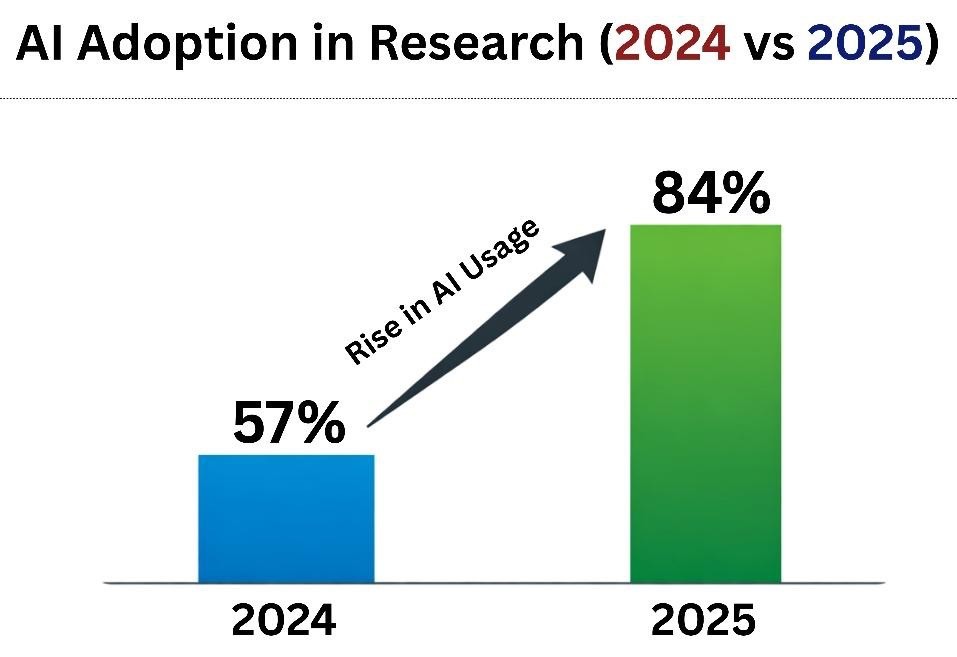
Let's get one thing out of the way, AI isn't optional anymore. Studies show nearly 90% of those who conduct research are utilizing AI tools, up from 67% only twelve months ago. This is incredible change over a short period of time. Another study states (i) 51% of all researchers are using AI to conduct literature reviews (ii) 46% of all researchers are using AI to assist with their writing and editing tasks. It is clear that AI is already integrated into the research process at the core level. It is also interesting to observe that approximately 76% of all researchers are utilizing AI tools, and many use AI tools on an everyday basis. There are no longer trends, we are going through a major change right now.
What Is an AI Research Assistant?
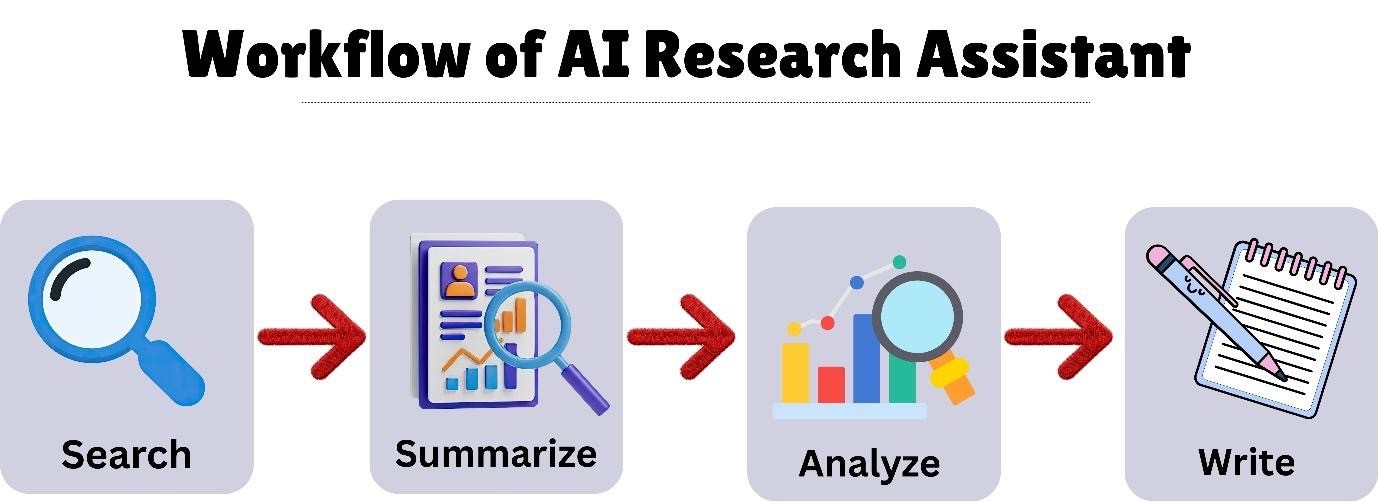
An AI research assistant will assist you with your various research stages. The AI Research Assistant can (i) Search for articles (ii) Summarize articles (iii) Extract important information from articles (iv) Prepare drafts (v) Refine language, and (vi) Help you come up with new ideas. For example: using an AI research assistant such as AnswerThis will allow you to discover and comprehend papers much quicker than without it, allowing you to read a report in minutes as opposed to taking many hours to read. These tools utilize natural language and machine learning in order to make complex academic material easier to understand.
How AI Is Changing Research Workflows
1. Literature Review Is Faster Than Ever
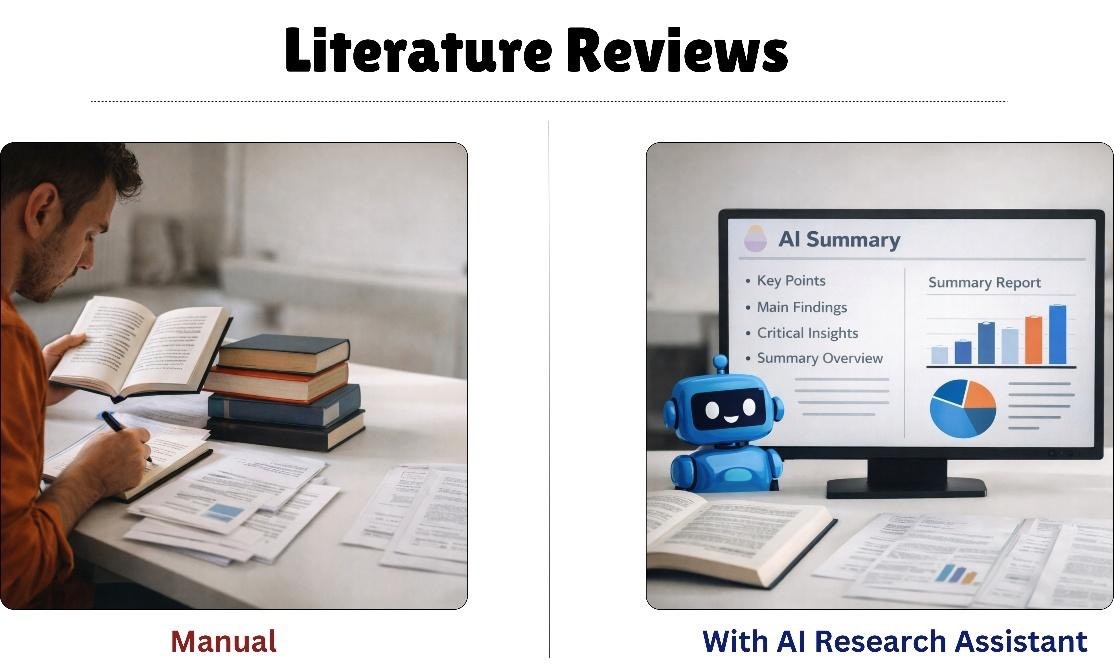
In the past completing a literature review could take many months to complete. Now, by using AI tools, researchers can (i) Instantaneously search through thousands of papers (ii) Highlight the important findings, and (iii) Compare different studies. This is why AI is now being used to perform the literature review more than 50% of the time by researchers. AI does not take time of reading, however it reduces the time required to locate and understand the research.
2. Writing Has Become More Efficient
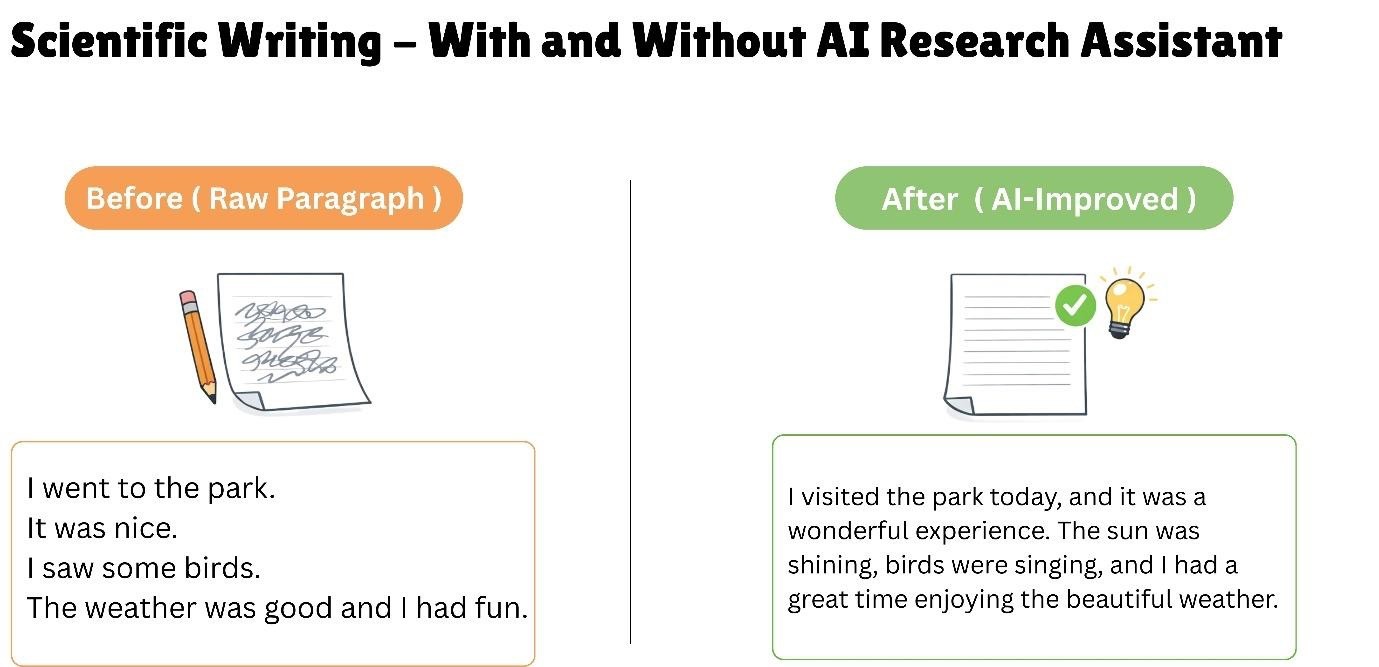
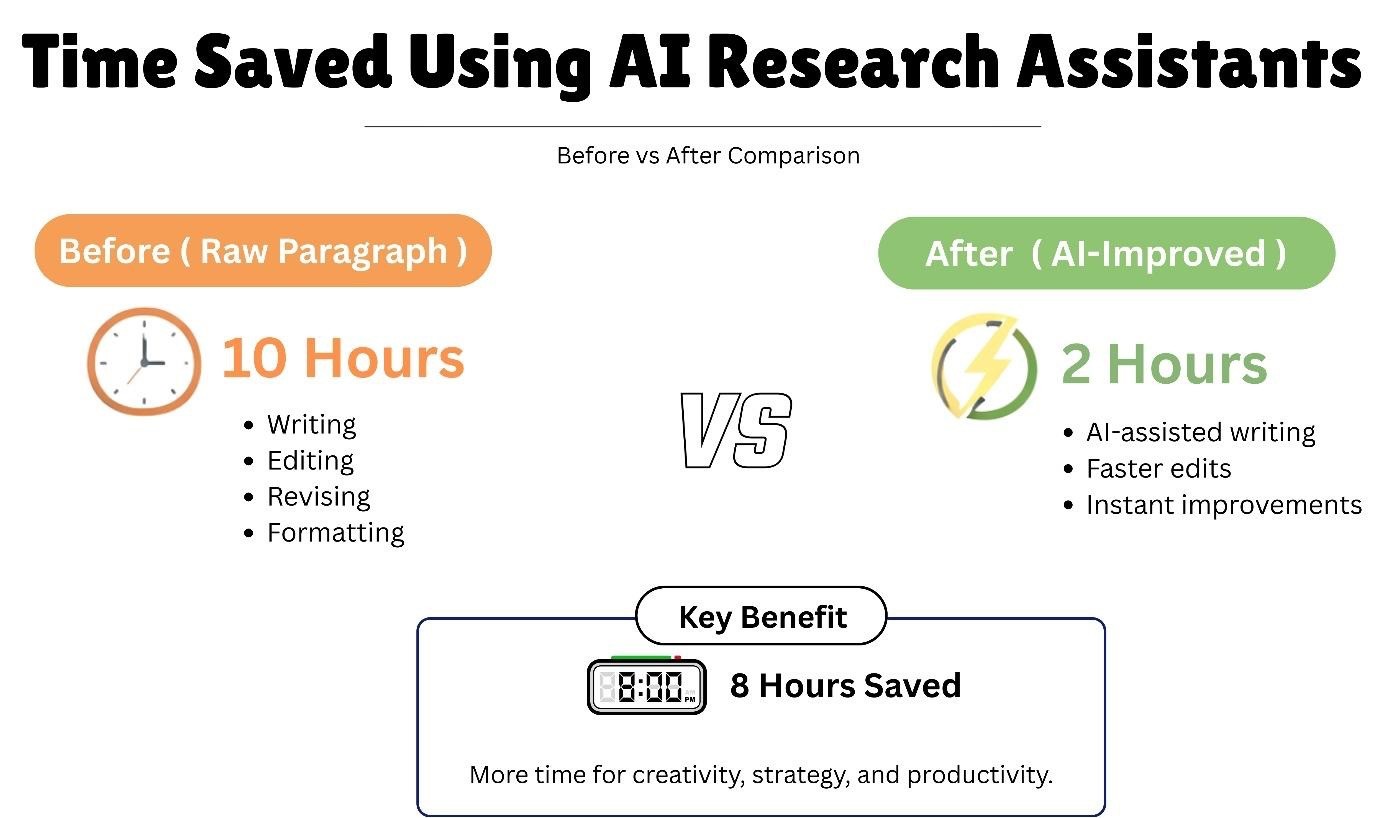
Researching can often make writing difficult for researchers. AI will assist researchers by (i) Structuring their drafts (ii) Facilitating clarity and grammar, and (iii) Suggesting improved phrasing. Research has demonstrated that AI is typically used to enhance writing and improve readability. That is especially true for researchers who speak English as a second language. AI adoption rates for writing are projected to increase by up to 400% in certain areas to aid researchers in overcoming language obstacles.
3. Idea Generation and Brainstorming
Many researchers use AI for these purposes like (i) Identifying possible areas for research (ii) Focusing on where there is no current research, and (iii) Finding new potential research directions, as well. AI is like a thinking partner or a collaborator. AI does not replace creativity or imagination rather it will help you to develop ideas more quickly.
4. Data Analysis and Interpretation
Researchers can use AI to quickly get from data to insights. Doing so is accomplished by helping with (i) Analysis of data sets (ii) Discovering patterns, and (iii) Suggestive interpretation. This is especially helpful in machine learning, healthcare, and social sciences. As a result of these benefits, researchers can now reach their conclusions much more quickly than they would have done in the past.
5. Collaboration Is Becoming Global
AI technology is creating a more collaborative environment. Researchers are able to perform the following tasks (i) Share information almost instantly (ii) Collaborate internationally, (iii) Translate and streamline their writing using AI systems. The world now has a collaborative environment to conduct scientific research.
Interesting Fact: AI Is Now a Research Partner
Recent reports show that approximately millions (a billion or more to be precise) of scientific inquiries are now performed using AI tools every week. For example, AI technology processes millions of research-related inquiries each week and shows that AI is integrated into research workflows at around the same level as a researcher would perform an inquiry. AI has progressed beyond being an assistant. AI now actively works alongside researchers.
The Benefits of AI Research Assistants
The advantages of comprehensive platform features and robust support are evident. Recent studies show that 85% of researchers recognize that AI-powered scholarly research tools and scientific research tools, such as those offered by AnswerThis and Clarivate Academic Solutions as well as the Web of Science Core Collection, significantly boost their research efficiency. Researchers also highlight enhancements in user experience, data security, and user privacy. Important benefits of these citation databases and advanced semantic search functions include (i) saving time, (ii) lowering workload, (iii) elevating the quality of writing, and (iv) accelerating the discovery of new information. Collectively, these factors drive greater quality and productivity in scholarly research.
But There Are Challenges Too
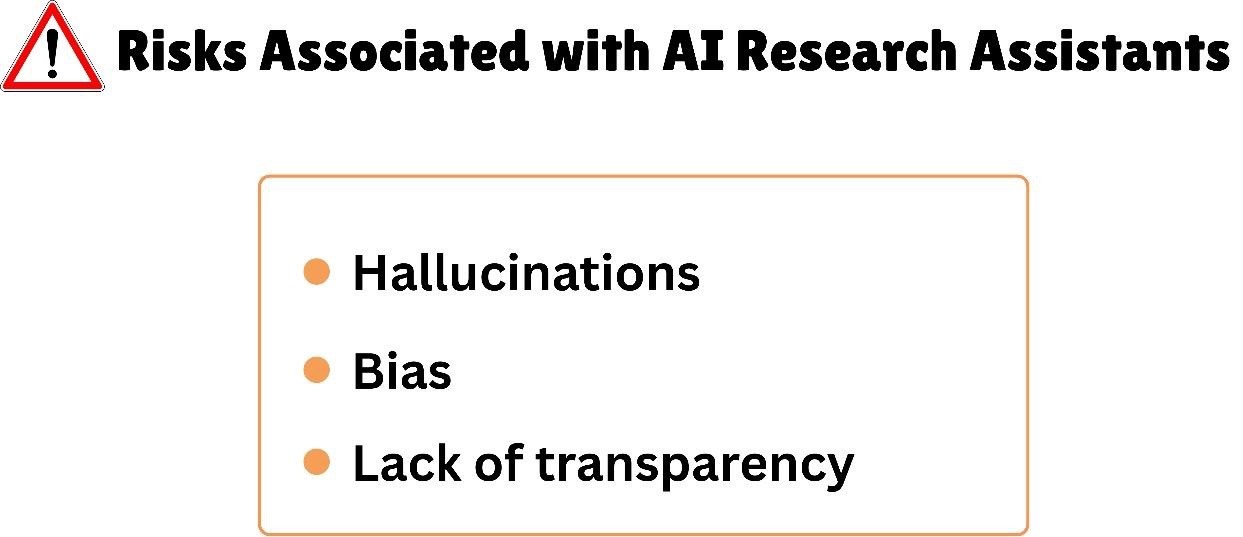
The process of transforming is not risk-free. Some of the areas that researchers believe that there is concern regarding these issues are (i) Accuracy/hallucination (ii) Privacy/data security and (iii) Over-reliance on AI research assistants. Transparency is also an issue. Most research articles do not indicate when they have been using AI. Because of these concerns, many academics raise serious ethical issues about the use of AI research assistants in research.
Ensuring access to high-quality research content is crucial for both researchers and librarians. Engaging the community throughout the research process not only builds trust but also helps create a responsible framework for applying technology. By fostering active participation, supporting application of research, and focusing on societal impact, the research community can maximize the benefits of innovation while maintaining high standards of quality and responsibility.
The Future of Efficient Research Workflows with AI
AI is transforming research by enabling efficient research workflows through time-saving technologies and task-based guidance. Rather than replacing researchers, AI empowers those who adopt it to excel by automating repetitive tasks such as building queries, reading abstracts, and intelligent discovery. This allows researchers to focus on creative analysis and innovation. The future of research will emphasize speed, international collaboration, and evidence-based practices, with AI providing context-specific and contextual prompts, guided walkthroughs, and tools to help determine relevance and streamline the process of conducting research.
Final Thoughts
The academic research community is undergoing a major transformation brought about by advances in AI technologies. AI provides new ways for researchers to create, share, and utilize knowledge. Therefore, to bring the future of academic research into fruition, we must embrace rather than resist these new technologies. This means to use AI wisely and responsibly. When done correctly, AI will allow you to (i) be more productive (ii) publish more research and (iii) improve your thought process. Most importantly you will be one step ahead of other researchers. Our recommendation is of course AnswerThis.
User experiences and testimonials further highlight the positive impact of AnswerThis as a research assistant tool. Academic subject matter experts and beta testers have praised its accuracy and relevance in real-world research scenarios, noting that it reduces information overload and enhances the quality and reliability of research outcomes. Feedback from user testing consistently mentions how AnswerThis streamlines learning scenarios and supports productive trial periods, ultimately helping researchers navigate the web of science more efficiently through advanced semantic similarity features. These testimonials underscore AnswerThis’s commitment to supporting researchers in their pursuit of excellence.


