What Is RRL in Research? Review of Related Literature Meaning, Format and Example

Dr. Rajni Garg
Executive Lead, Research & Content Strategy
8 min read

RRL stands for review of related literature. It is the part of a research paper or thesis where you explain what other researchers have already found about your topic, compare their findings, and show where your own study fits.
If you are writing a research paper or thesis in the Philippines, you will almost certainly need one. This page explains what an RRL is, where it goes and how to write one, then walks through a short example with notes on what each paragraph does.
TL;DR
An RRL compares and connects earlier research so readers can see what is known and what is still missing.
In many Philippine theses it is Chapter 2, and it ends with a synthesis that leads into your study.
You write it in six steps: search, read, take notes in a matrix, group by theme, synthesize and cite.
Every source must be real and must say what you claim it says.
What does RRL mean in research?
RRL is what many Philippine schools call the literature review. It shows your reader what has already been studied, where researchers agree and disagree, and what nobody has looked at yet. That last part matters most, because an unanswered question is the clearest reason for your study to exist.
It helps to think of an RRL as a conversation rather than a list. A list says, “Study A found this, and Study B found that.” A conversation says, “Studies A and B agree, Study C does not, and the difference may come from how each chose its sample.” Panels are usually looking for the second kind.
Where does the RRL go in a Philippine thesis?
In the five-chapter format many Philippine schools use, the RRL is Chapter 2, between the problem and its background (Chapter 1) and the methodology (Chapter 3). It usually covers related literature and related studies and ends with a synthesis that states your research gap. Some schools also put the theoretical and conceptual framework here and others put it in Chapter 1, so check your research manual.

What is the difference between related literature and related studies?
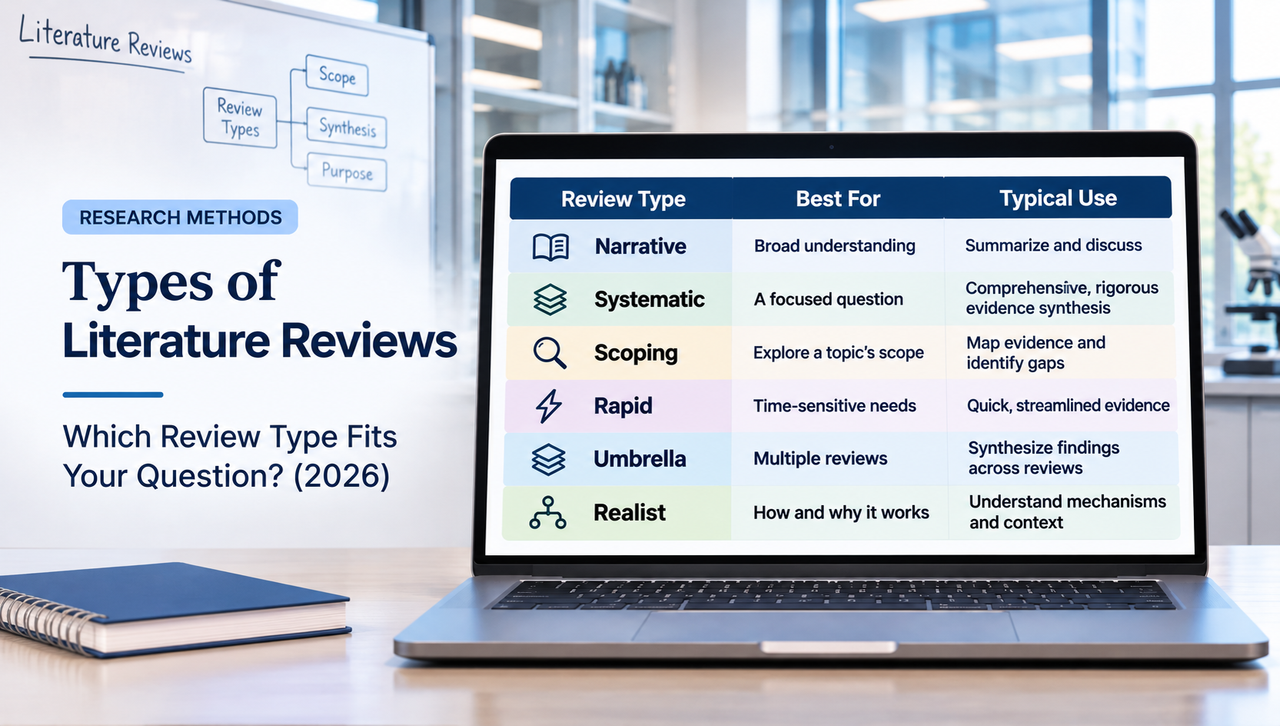
Many schools split Chapter 2 into related literature and related studies, and then into local and foreign sources. Most define them roughly like this, though your research manual has the final word.
Term | What it usually means |
|---|---|
Related literature | Published material that discusses the ideas, facts or theories behind your topic, such as books, articles and government reports |
Related studies | Earlier research that collected its own data, such as theses, dissertations and research articles |
Local | Studies conducted, or works published, in the Philippines |
Foreign | Studies conducted, or works published, outside the Philippines |
Whether a study counts as local usually depends on where it was done, not on the author's nationality. Foreign research often supplies the theories and the larger body of evidence, while local research shows whether those findings hold for Filipino students or communities. If you cannot find local studies, say so, because that scarcity can be part of your research gap.
How do you write an RRL?
Writing an RRL is mostly reading and sorting. Resist the urge to start drafting after your first three sources, because the shape of a review usually appears only after you have read widely.
Search. Turn your research questions into keywords and search Google Scholar, your library's databases and, for local studies, Philippine E-Journals and university thesis repositories.
Read. Use the abstract to decide whether a source is relevant, then read the method, sample, findings and limitations. A survey of 50 students and a survey of 2,000 cannot support the same claims.
Take notes in a matrix. Give each source a row and record the author, year, local or foreign, sample, method, findings and theme. Our literature review matrix guide has a layout you can copy.
Group by theme. Look for sources that answer the same question. Two to four themes are enough for most student papers.
Synthesize. Open each paragraph with a point that covers several studies, compare the evidence, explain any disagreement, and say what it means for your topic.
Cite. Use your school's citation style, often APA, and confirm that every reference exists and supports your sentence. AI chatbots can invent references that look real, so see our guide to checking for AI-fabricated citations.


What format and length should an RRL follow?
Your research manual and adviser come first, since formats and page counts vary by school and level. Most RRLs open with a short paragraph naming the topic and themes, organize the body by theme or by source type (foreign and local literature, then foreign and local studies), and close with a synthesis. Many advisers prefer sources from roughly the last five to ten years, with older works kept for theories and landmark studies. For a fill-in structure, use our literature review template.
RRL example: generative AI use among college students
Here is a short thematic RRL for an imagined study, “Use of Generative AI Tools Among College Students in the Philippines.” It uses five real studies, three from the Philippines and two from elsewhere, discussed together under each theme. A thesis RRL would be longer and cover more sources, as our literature review examples show.
Opening paragraph
Generative AI tools such as ChatGPT have quickly become part of how many college students study and write. This review examines how widely students use these tools and why, what benefits and risks they see, and where they draw the line on acceptable use, drawing on studies from the Philippines and abroad published since 2023.
What this paragraph does: It names the topic, previews the three themes and sets the scope of the sources.
Adoption of generative AI
Generative AI use among university students is already widespread. More than half of 2,555 students surveyed at the University of Liverpool had used or considered using these tools for academic purposes (Johnston et al., 2024). In the Philippines, Hernandez et al. (2023) found that habit, performance expectancy and personal innovativeness predicted students' intention to use ChatGPT, and that age and year level did not moderate these relationships. Himang et al. (2026), surveying 2,254 undergraduates from 95 Philippine institutions with the same UTAUT2 framework, found instead that age, gender and experience did. The difference may reflect who was sampled, which is a reason to generalize from any single study with care.
What this paragraph does: It opens with a claim, supports it with a foreign study, then shows where two local studies disagree and offers a cautious reason.
Perceived benefits and risks
Students in different settings describe similar benefits and worries. Students in Hong Kong valued generative AI for writing, brainstorming and personalized learning support but were concerned about accuracy, privacy and ethics (Chan & Hu, 2023). Students in Eastern Visayas likewise found ChatGPT moderately useful for academic research, especially for writing and generating ideas, while reporting inaccurate answers and concerns about plagiarism (Cabuquin et al., 2024). That study used convenience sampling, however, so its results may not represent Filipino students as a whole.
What this paragraph does: It pairs a foreign and a local study on the same question, states what they share, and names a limitation.
Acceptable use
Students do not treat every use of AI the same way. At Liverpool, 54.1% of students were supportive or somewhat supportive of tools such as Grammarly, while 70.4% were unsupportive or somewhat unsupportive of using ChatGPT to write a whole essay (Johnston et al., 2024). Cabuquin et al. (2024) recommended that Philippine schools set clear guidelines, but none of the local studies reviewed here asked students which uses they consider acceptable.
What this paragraph does: It reports a foreign finding, then states what local research has not yet covered, which sets up the gap.
Synthesis
Taken together, these studies show that generative AI is already common among college students, valued especially for writing support, and a source of concern about accuracy and integrity. Philippine studies have focused on acceptance and perceived usefulness, and none asked how Filipino students decide which uses are acceptable or how they check AI output. The present study addresses that gap.
What this paragraph does: It pulls the themes into one claim, names the gap and ties it to the study.
Each citation links to the original study. In your own RRL, add a full reference list in your school's citation style, and read each paper in full before you cite it.
What are the most common RRL mistakes?
One study per paragraph. If every paragraph starts with an author's name, you have written an annotated bibliography, not a review.
No synthesis. Without one, the reader has to guess why your study is needed, and panels rarely enjoy guessing.
Old sources. If most of your sources are more than ten years old, run your search again with a recent date filter.
Invented or misread citations. A reference that does not exist, or does not support your sentence, is one of the most serious problems a panel can find.
Can an AI tool help you write an RRL?
Yes, for the early work, if your school allows it and you treat the output as a draft to check. Chatbots can invent references, so tools that work from real scholarly records are safer. The AnswerThis RRL generator drafts a 600 to 900 word English RRL with three themes, a synthesis and limitations from the abstracts it finds, with links to its sources, and gives you three free runs. It works from abstracts, which makes it a quick way to spot themes and sources before you read each paper in full and write in your own words.

For an outline and one cited opening paragraph, try the AI literature review generator, and for literature reviews in general, see our guides on how to write a literature review and what a good literature review looks like.
FAQs
Is an RRL the same as a literature review?
Mostly, yes. RRL is the term many Philippine schools use, and the main difference is that they often ask you to separate related literature from related studies, and local sources from foreign ones.
What is the difference between RRL and RRS?
RRS means review of related studies. Where schools use both terms, the RRL covers published literature and the RRS covers earlier research such as theses and dissertations. Many schools combine them in one Chapter 2.
How many sources should an RRL have?
There is no universal number, so follow your school's or adviser's minimum. Aim for enough sources to cover each theme from more than one angle, with local and foreign studies where they exist.
Can I use ChatGPT to write my RRL?
Check your school's rules first. Even where it is allowed, a chatbot can invent references or misdescribe real papers, so you still need to find, read and verify every source yourself.
Does the theoretical framework belong in the RRL?
It depends on your school. Some place the theoretical and conceptual framework in Chapter 2 after the synthesis, and others place it in Chapter 1, so check your research manual.
Ready to start on your own topic? Try the RRL generator to see which themes and sources come up, then build your RRL around what you read.